
Finding beautiful jewelry that doesn't leave you with an itchy, red rash shouldn't be a game of chance. If you’ve ever had a favorite new ring or pair of earrings turn against you, causing irritation and discomfort, you know exactly what I'm talking about. You're definitely not alone. The good news is, you can absolutely wear stunning pieces with confidence—once you know what to look for.
The secret lies in choosing the right metal. The safest, most hypoallergenic jewelry metals are platinum, palladium, titanium, and niobium because they are naturally nickel-free and incredibly pure. Other fantastic options for sensitive skin include high-karat gold and surgical stainless steel, which strike a great balance between beauty, durability, and affordability.
Your Guide to Irritation-Free Jewelry
Let's cut through the confusion and get you back to enjoying your jewelry. That frustrating skin reaction is almost always a sign of a metal allergy, turning a beautiful accessory into a source of misery. But it doesn't have to be that way.
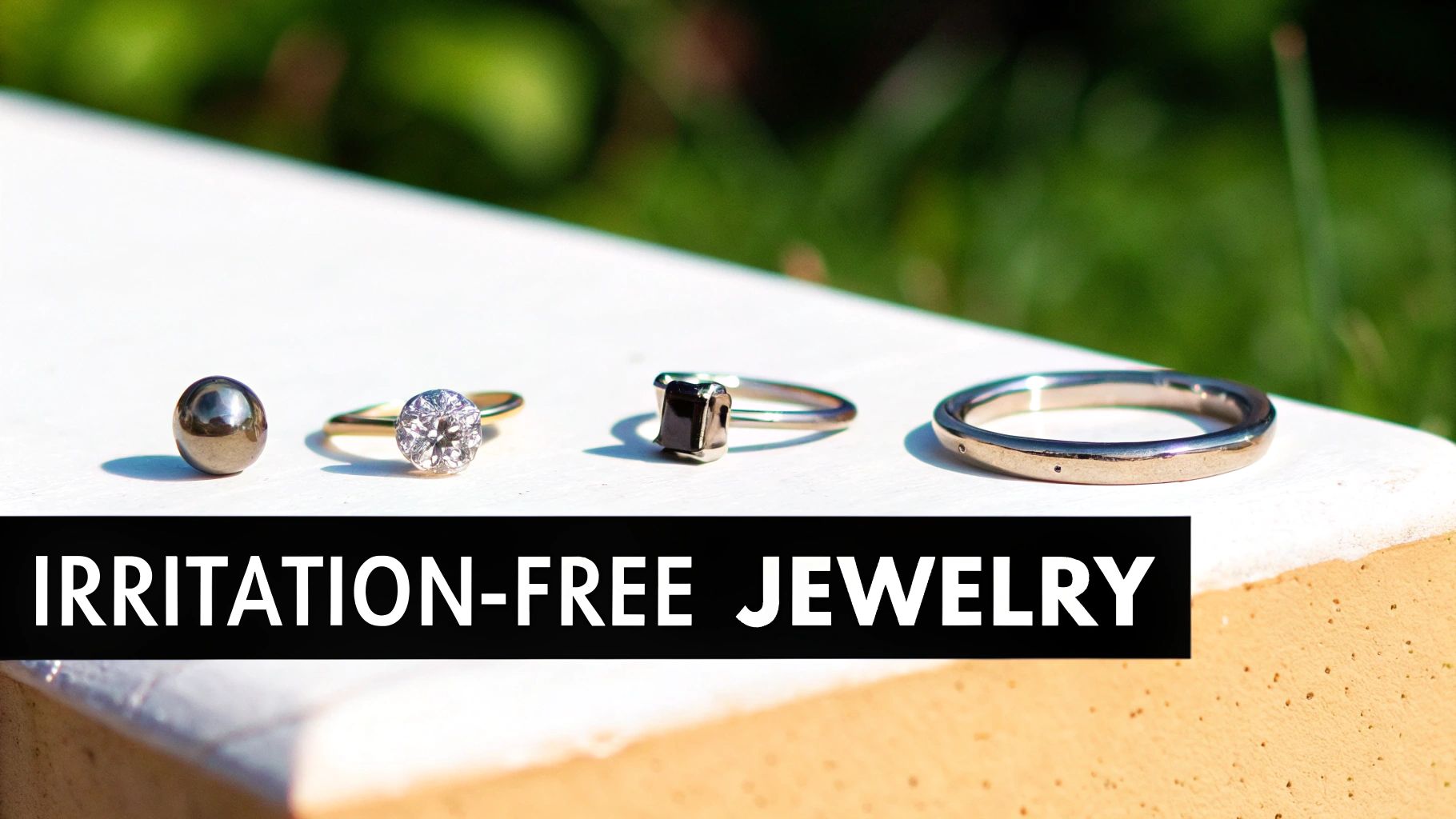
This guide is here to give you the expert knowledge you need to pick out gorgeous, irritation-free jewelry every time. We'll start by breaking down what "hypoallergenic" really means and get to the bottom of why some metals are troublemakers while others are perfectly safe.
Demystifying "Hypoallergenic"
First things first, the word hypoallergenic simply means "less likely to cause an allergic reaction." It isn't a medical guarantee that no one on earth will react to it, but it signals that the material has a very low risk of causing that dreaded rash.
Think of your immune system as a well-meaning but sometimes overzealous security guard. For some people, it mistakenly identifies harmless particles (metal ions) as dangerous intruders and sounds the alarm. The result? Redness, itching, and swelling. The number one culprit behind these false alarms is nickel.
In fact, up to 20% of the population has a sensitivity to nickel, which is why the demand for safer alternatives has skyrocketed. Hypoallergenic metals are those that contain little to no nickel, making them a safe haven for sensitive skin.
This shift isn't just a small trend; it's reshaping the jewelry industry. Market analysis shows that jewelry made from base metals, including skin-friendly options like surgical steel and titanium, is the fastest-growing segment. You can dig into more of these industry shifts and see how shoppers are demanding safer jewelry options on mordorintelligence.com. It’s clear that understanding your metal choices is more important than ever.
Quick Guide to Hypoallergenic Metals
To make things easier, I've put together a quick comparison of the most common and trusted hypoallergenic metals. This table should give you a great starting point for finding your perfect match.
| Metal Type | Hypoallergenic Rating | Average Cost | Best For |
|---|---|---|---|
| Platinum | Excellent | Very High | Engagement rings & luxury items |
| Titanium | Excellent | Moderate | Everyday wear, active lifestyles |
| Niobium | Excellent | Moderate | Earrings & colorful artistic pieces |
| Surgical Steel | Very Good | Low | Trendy, durable everyday jewelry |
| 18k Gold | Good | High | Classic fine jewelry |
Knowing the basics of these metals is the first step to building a collection you can wear without a second thought. After all, a brilliant gem like moissanite deserves a setting that’s not only beautiful but also comfortable and safe for your skin. If you're curious, you can learn more about what moissanite is and why it's a popular choice in our detailed guide.
What's Really Happening When Jewelry Irritates Your Skin?
Ever put on a new pair of earrings, only to find your earlobes red and itchy a few hours later? It's not just a fluke; it's a specific immune response called allergic contact dermatitis. This happens when your skin touches something it considers an invader, causing your body's defense system to go into overdrive.
Think of it this way: someone grabs a cheap, trendy necklace. It looks great for a few weeks, but then an annoying rash appears on their neck. That's a classic case of developing a sensitivity, where a favorite accessory suddenly becomes a source of serious discomfort.
Now, this is different from the harmless green or black mark a copper ring might leave behind. That’s just oxidation—a simple chemical reaction between the metal and the natural oils on your skin. It’s temporary and washes right off. A true metal allergy, on the other hand, is your immune system stepping in, causing real inflammation that only gets worse the more you wear the piece.
The Number One Suspect Behind Most Metal Allergies
So, what's the most common trigger for these skin flare-ups? In the world of jewelry, one metal is almost always the villain: nickel.
Nickel is a strong, shiny, and inexpensive metal. That's why it's so frequently mixed with other metals to create alloys, making them more durable and giving them a bright, silvery finish. You'll find it in everything from costume jewelry and watchbands to belt buckles and even some gold alloys. The issue starts when nickel comes into contact with moisture, like sweat. It begins to release tiny metal ions.
Those ions seep into your skin and can bond with your body's own proteins. For many people, the immune system mistakes this new metal-protein combo as a threat and launches an attack. That's what causes the itching, redness, and swelling we associate with a metal allergy.
It's not some rare condition, either. Nickel is the leading cause of metal-related contact dermatitis worldwide, driving a massive demand for safer, truly hypoallergenic jewelry.
Why Are Nickel Allergies So Common?
Here's the frustrating part: once your body decides it doesn't like nickel, that sensitivity is usually for life. In fact, the more you're exposed to it, the more intense your reactions can become. This is why you can wear a ring for years without any issues and then, seemingly out of nowhere, develop a full-blown allergy to it.
This problem affects a huge number of people. Roughly 15% of the population has a nickel allergy, making it the top reason for jewelry-related skin reactions. The sensitivity is also far more prevalent in women—around 15% of women have it, compared to just 2% of men. This is likely because women have traditionally had more piercings and worn more jewelry throughout their lives. You can dive deeper into why nickel is a major concern for jewelry shoppers if you want to explore the data.
Pinpointing nickel as the likely cause is the most crucial step toward finding jewelry you can wear without worry. It takes the guesswork out of the equation and empowers you to choose materials that won't just look beautiful, but feel comfortable against your skin.
Comparing The Best Hypoallergenic Metals
So, you know why your skin might be reacting to certain jewelry, but which metals are the good guys? Think of this as your guide to finding the perfect match—a metal that offers all the sparkle you want without any of the drama. It’s all about striking a balance between your skin's needs, your budget, and, of course, your personal style.
This whole issue boils down to how a metal interacts with your skin. When you sweat, your jewelry is exposed to moisture and salts, which can cause some metals to release tiny particles called ions. If your immune system doesn't like those ions, you get a rash.
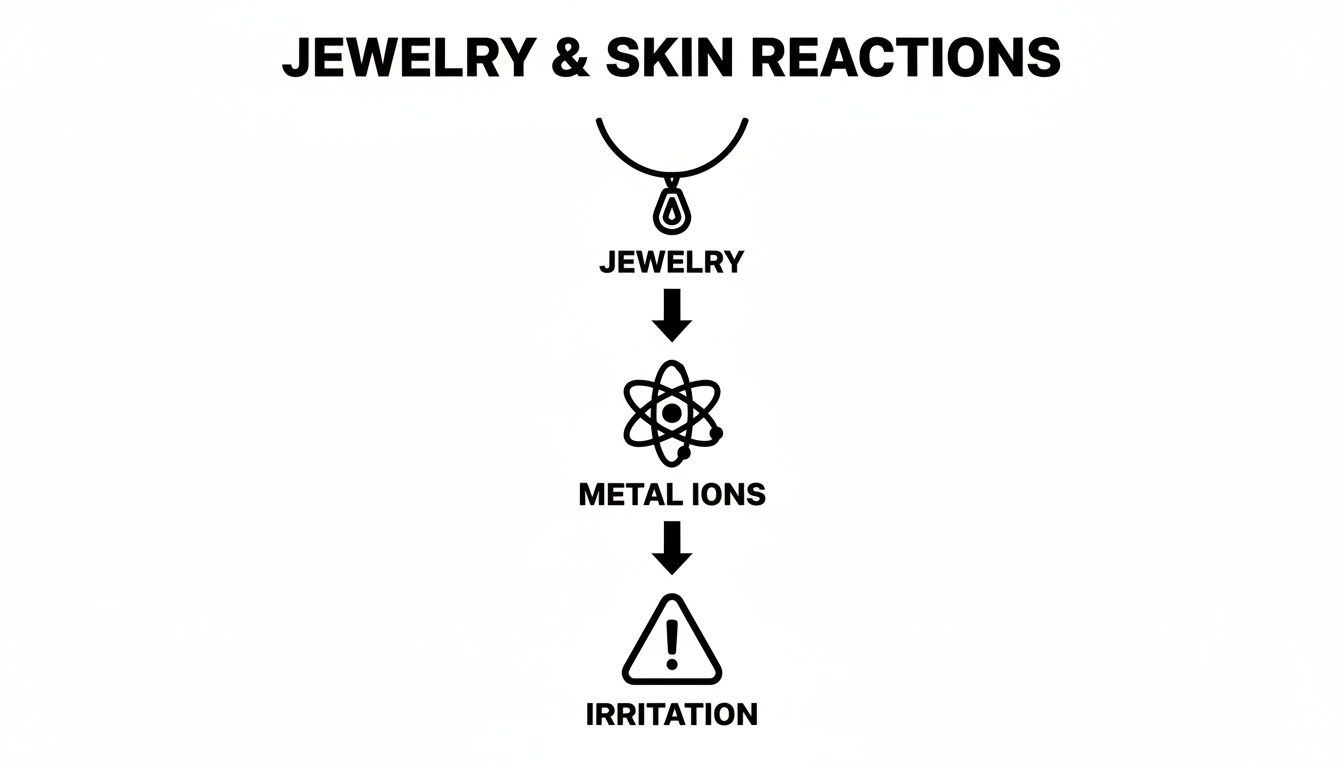
The flowchart above shows exactly how that process works. The safest metals are the ones that are "inert"—they just don't release those irritating ions in the first place, stopping the reaction before it can even start.
Platinum: The Undisputed Champion
When it comes to hypoallergenic metals, platinum is in a league of its own. It's naturally white, incredibly dense, and almost completely non-reactive. That means it won’t tarnish, and more importantly, it won't bother your skin.
- Purity: Jewelry-grade platinum is typically 95% pure (you’ll see a "950 Plat" stamp), which leaves almost no room for sneaky irritants to hide.
- Durability: It’s one of the strongest and most secure metals out there, making it the top choice for setting precious stones in engagement rings that are meant to last a lifetime.
- Aesthetic: Over time, platinum develops a soft, satin-like finish called a patina, which many people adore for its understated elegance.
The only real downside? Its price tag. Platinum is one of the rarest precious metals on Earth, so it's a true luxury investment.
Palladium: A Lighter Sibling To Platinum
Palladium is part of the platinum group of metals and shares many of its best traits. It has that same naturally bright white color and is completely hypoallergenic, making it another fantastic option if you have very sensitive skin.
The big difference here is weight. Palladium is much less dense than platinum, so a ring made from it will feel significantly lighter on your finger. Some people love this for its comfort, especially with wider bands. This lower density also helps make it a bit more affordable than its heavier sibling.
Titanium: The Modern Powerhouse
If you need a ring that can stand up to a seriously active lifestyle, look no further than titanium. This metal got its start in the aerospace industry, but it’s become a favorite for modern jewelry because of its incredible strength and feather-light weight.
Key Takeaway: Titanium is 100% biocompatible. That means it’s so safe for the human body that surgeons use it for medical implants. You can’t get much more hypoallergenic than that.
What else makes it so great?
- Lightweight Comfort: It's so light you might honestly forget you’re wearing it.
- Extreme Durability: This metal is a beast. It's incredibly resistant to scratches, dings, and corrosion.
- Affordability: Titanium gives you top-tier hypoallergenic protection at a price that's far more accessible than platinum or even gold.
The one catch with titanium is that its strength makes it very difficult to resize. You’ll need a jeweler with special equipment, so it's super important to get your ring size perfect from day one.
Niobium: The Colorful And Safe Option
Niobium is another fantastic biocompatible metal, putting it on the same level of safety as titanium. It's completely nickel-free and a lifesaver for people with extreme metal allergies.
What really sets niobium apart is its unique ability to be anodized. This is an electrical process that creates a stunning rainbow of iridescent colors on the metal’s surface—all without any paint or plating. This makes it a go-to choice for artistic and custom pieces, especially colorful earrings.
High-Karat Gold: A Classic Reimagined
Everyone loves gold, but for those with sensitive skin, the purity—or karat—is everything. Pure 24k gold is far too soft to be worn every day, so it’s mixed with other metals (called alloys) to make it stronger. The problem is, sometimes those alloys include nickel.
- 18k Gold: This is 75% pure gold. The other 25% is usually a mix of skin-safe metals like copper and silver in high-quality jewelry.
- 14k Gold: This is 58.3% pure gold, which means it has a higher percentage of alloy metals. The risk of a reaction goes up slightly, especially if you don't know what those alloys are.
Your best bet is to stick with 14k gold or, even better, 18k gold from a trusted jeweler who can guarantee their alloys are nickel-free. Be extra cautious with white gold, which traditionally uses nickel to get its silvery color. Thankfully, many modern jewelers now use a palladium-based alloy instead, often with a rhodium plating for an extra layer of protection and shine. You can learn more about the benefits and cost of rhodium plating in our detailed guide.
Surgical Stainless Steel: The Smart And Affordable Choice
Don't let the budget-friendly price fool you—surgical stainless steel is a seriously good hypoallergenic option. The grade you’ll most often see in jewelry is 316L, which is prized for its high resistance to corrosion.
Now, it does contain a tiny amount of nickel. But the key is that the nickel is chemically bound so tightly within the metal's molecular structure that it's extremely unlikely to ever be released and cause a skin reaction. For most people with mild nickel sensitivities, it's completely safe and comfortable to wear.
Hypoallergenic Metals Comparison for Jewelry Shoppers
To make things easier, here’s a quick-glance table comparing our top picks. It helps lay out the pros and cons of each metal so you can see which one truly fits your needs.
| Metal | Hypoallergenic Quality | Durability & Scratch Resistance | Weight | Price Point | Ideal For |
|---|---|---|---|---|---|
| Platinum | Excellent (95% Pure) | High | Very Heavy | $$$$ | Heirloom engagement rings, luxury pieces |
| Palladium | Excellent | High | Light | $$$ | Sensitive skin, lighter alternative to platinum |
| Titanium | Excellent (Biocompatible) | Very High | Extremely Light | $$ | Active lifestyles, wedding bands, modern designs |
| Niobium | Excellent (Biocompatible) | Moderate | Very Light | $$ | Colorful artistic jewelry, severe allergies |
| 18k/14k Gold | Good to Very Good | Moderate | Heavy | $$$ | Classic fine jewelry (confirm nickel-free alloys) |
| Surgical Steel | Good (316L Grade) | High | Heavy | $ | Everyday wear, budget-conscious shoppers |
Choosing a hypoallergenic metal is a personal decision, but with this information, you can shop with confidence, knowing you’re picking something that's not only beautiful but also kind to your skin.
How to Confidently Shop for Safe Jewelry
Trying to find beautiful jewelry when you have sensitive skin can feel like walking through a minefield. One wrong step, and you're dealing with an itchy, red rash. But with a little know-how, you can go from being a nervous buyer to a confident expert. The secret is learning to read the language of jewelry—those tiny stamps and hallmarks that reveal exactly what a piece is made of.
Think of these markings as your ultimate insider guide when hunting for hypoallergenic metals. They're a guarantee of purity and composition, regulated by industry standards, so getting to know them is your first step toward a lifetime of irritation-free sparkle.
Decoding Metal Hallmarks
A hallmark is basically a piece of jewelry's ingredient list. You'll usually find these tiny engravings on the inside of a ring shank or near the clasp of a necklace, and they give you a clear snapshot of the metal’s identity.
Here are the most common stamps you’ll see when looking for safe, high-quality pieces:
- Platinum: Look for stamps like PLAT, PT, or 950. That "950" tells you the metal is 95% pure platinum, which is why it's one of the absolute best choices for anyone with highly sensitive skin.
- Gold: For gold, the karat stamp is key. 18k (75% pure gold) or 14k (58.3% pure gold) are generally great options, but you'll still want to confirm what other metals are in the alloy.
- Surgical Stainless Steel: The grade you want to see is 316L. This stamp is your assurance that you're getting corrosion-resistant steel where any nickel is so tightly bound that it’s highly unlikely to cause a reaction.
Learning to spot these marks empowers you to instantly gauge a piece's quality and whether it's right for your skin, long before you even think about trying it on.
Ask the Right Questions
Hallmarks are a fantastic starting point, but they don't always paint the full picture, especially when it comes to gold alloys. This is where you need to step up and be a proactive, informed shopper. Never hesitate to ask your jeweler direct questions to be certain about what you’re buying.
A reputable jeweler will always be transparent about the metals they use. If they can't confidently tell you what's in their alloys, it's a major red flag.
When you're shopping, particularly for something like white gold, get specific. Ask point-blank, "Does this 14k white gold contain a nickel alloy, or is it made with a palladium alloy?" A good jeweler will respect your diligence and give you a straight answer. That one simple question could save you a world of discomfort later on.
How to Test for Sensitivities
If you're not quite sure what your triggers are or you want to test a new piece you just bought, there are a few safe ways to check for a reaction. Before you commit to wearing a new ring or bracelet all day, try a simple patch test at home.
- Wear it for a short period: Put the jewelry on for just a few hours while you're relaxing at home.
- Check the area: Take the piece off and look closely at your skin. Are there any signs of redness, itching, or irritation?
- Extend the time: If your skin looks perfectly fine, try wearing it for a longer stretch the next day.
Of course, for a definitive answer, nothing beats seeing a professional. A dermatologist or allergist can perform a proper patch test to pinpoint exactly which metals you react to. This gives you total clarity and the confidence to make smart jewelry purchases for life.
Maintaining Your Hypoallergenic Jewelry
You’ve done the hard work and picked out the perfect hypoallergenic metal. But that’s only half the battle. To keep your jewelry looking brilliant and feeling comfortable for years to come, you need to show it a little love.
Think of it this way: even the safest, most inert metal can become an irritant if it’s trapping gunk against your skin. Daily life leaves behind a film of lotion, soap, sweat, and dirt. This buildup creates a perfect environment for moisture and bacteria, which can easily lead to a rash—even if the metal itself isn't the problem.
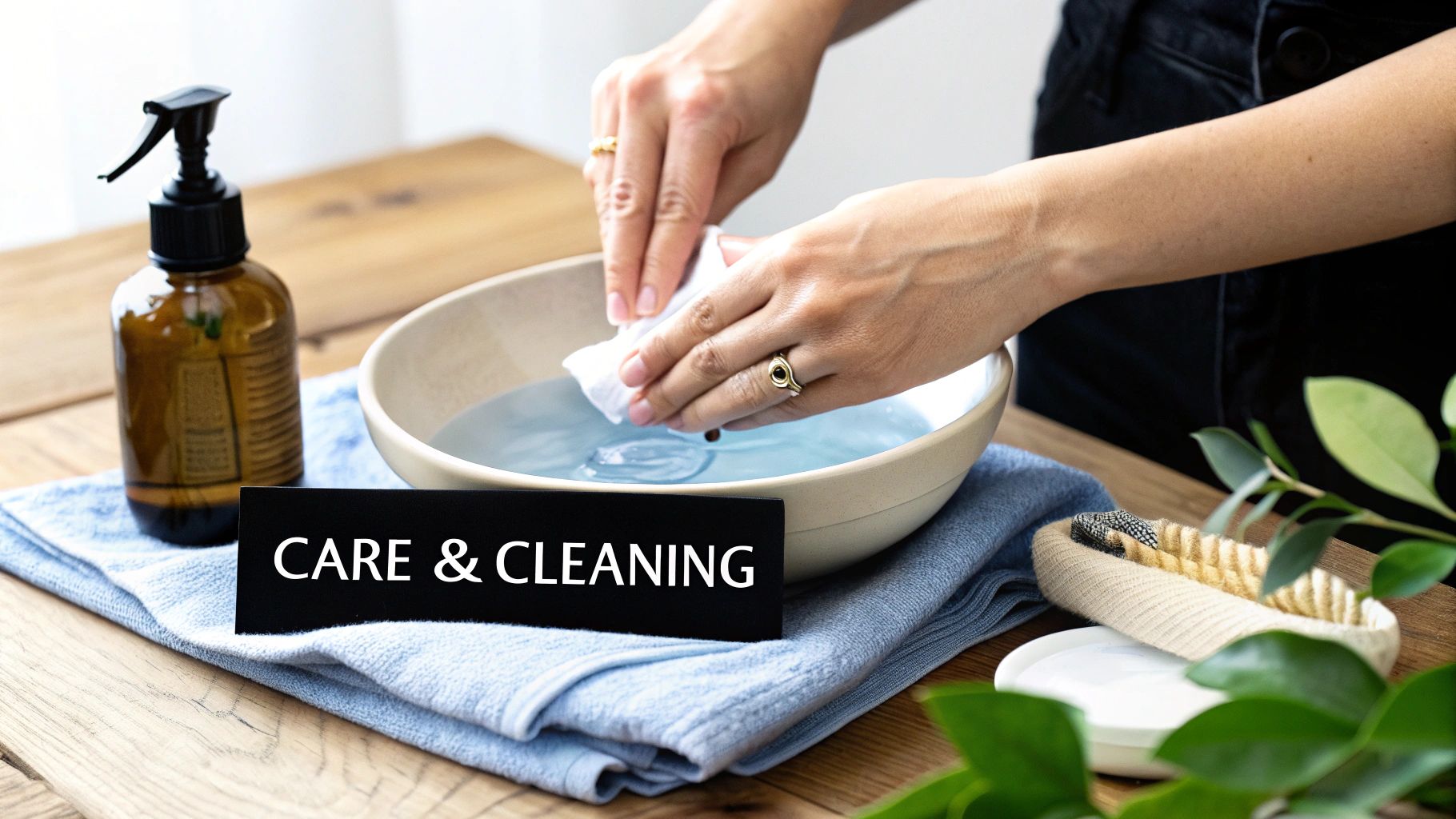
So, regular cleaning isn't just about sparkle. It's about skin health. Keeping your jewelry clean is the single best way to protect your skin and your beautiful investment.
Simple Cleaning for Every Metal
The good news is, you don't need a lab full of harsh chemicals. In fact, those often do more harm than good. For most hypoallergenic metals, a gentle touch is all you need to restore that "new jewelry" feeling.
- Titanium and Niobium: These are the champs of low-maintenance care. A simple wash with warm water and a mild, fragrance-free soap is all it takes. Use a soft cloth to get into any nooks and crannies, rinse it well, and pat it dry. Done.
- Platinum and Palladium: These precious metals are tough, but they deserve a gentle hand. A soft-bristled toothbrush, warm water, and a drop of mild soap will work wonders. If you want to polish away the natural patina that develops over time, it’s best to take it to a professional jeweler.
- High-Karat Gold: Give your gold a little spa day. A 15-minute soak in a bowl of warm water with a few drops of gentle dish soap will loosen any grime. Afterwards, you can use a super-soft brush to clean around settings before rinsing it completely.
- Surgical Stainless Steel: Just like titanium, this powerhouse metal is a breeze to clean. Warm water and mild soap will have it gleaming in no time. Its incredible resistance to corrosion means it stays looking great with minimal effort.
Pro Tip: Never put your jewelry away wet! Always make sure it’s completely dry before storing it. Trapped moisture is a fast track to skin irritation and can even cause some metals to tarnish.
Best Practices for Long-Term Wear
Beyond a regular cleaning schedule, a few smart habits can go a long way in preventing skin reactions and keeping your jewelry in top shape. It's all about minimizing contact with chemicals and environments that can cause trouble.
To keep your pieces looking and feeling their best:
- Jewelry Off for a Swim: Chlorine and saltwater are notoriously harsh. They can cause discoloration and serious damage to precious metals and their alloys.
- Protect it From Chores: Household cleaners are the enemy of fine jewelry. Bleach and other strong chemicals can strip protective finishes and eat away at the metal itself.
- Lotion and Perfume First: Think of your jewelry as the finishing touch. Always apply cosmetics, hairspray, and perfumes first and let them dry completely before putting on your rings, necklaces, or earrings. This prevents that sticky residue from building up.
Following these simple steps will ensure your favorite pieces stay as comfortable and brilliant as the day you got them. For more in-depth advice, check out our guide to learn how to care for your moissanite jewelry so it lasts a lifetime.
Your Checklist for Buying Hypoallergenic Jewelry
Shopping for jewelry when you have sensitive skin can feel like a guessing game, but it really doesn't have to be. Once you know what to look for, you can pick out beautiful pieces with total confidence, knowing they won't cause that dreaded itchy rash. Think of this checklist as your secret weapon—a simple guide to making smart, skin-friendly choices every single time.
This isn't about becoming a metallurgist overnight. It’s about knowing which questions to ask and what signs to look for. By following these steps, you can easily sidestep the problem metals and build a jewelry collection you can actually wear and love for years to come.
Before You Buy: Assess Your Needs
First things first, let's talk about you. Your skin and your lifestyle are the biggest factors in finding the perfect metal, so a little self-assessment goes a long way.
-
Know Your Sensitivity Level: How sensitive are you, really? If even the slightest hint of the wrong metal sets your skin off, you’ll want to stick with the undisputed champs: platinum, titanium, or niobium. If you have milder reactions, you can probably wear high-karat gold or surgical steel without any trouble.
-
Match the Metal to Your Lifestyle: Are you constantly on the go, working with your hands? If you need a ring that can stand up to daily life, the sheer toughness of titanium or surgical steel is your best bet. For something as significant as an engagement ring, the timeless elegance and resilience of platinum is hard to beat.
At the Jewelry Counter: Know What to Ask
Alright, you're ready to shop. It's time to put what you've learned into practice. Never feel shy about asking questions—a good jeweler will be happy to share their knowledge and prove the quality of their pieces. This is how you confirm you’re getting the real deal.
Your goal is to look past vague marketing terms like "hypoallergenic" and get the hard facts about the materials. When it comes to your comfort and health, getting a clear answer from the seller is a must.
Here’s exactly what to ask the jeweler before you pull the trigger:
-
Confirm the Metal Type and Hallmark: Always ask to see the stamp. It’s usually tucked away on the inside of a ring or near the clasp. You're looking for official marks like “950 PLAT” for platinum, “18k” or “750” for high-karat gold, or “316L” for surgical steel. This little stamp is your proof of what you're buying.
-
Question the Alloys (Especially for Gold): This is the big one. Ask point-blank, "Is this white gold mixed with nickel or palladium?" A direct answer is what you need to avoid the most common skin irritant. If the salesperson seems unsure or can't tell you, it's a red flag. Better to be safe and move on.
-
Compare Value and Longevity: Think about your budget over the long haul. Platinum is a significant investment upfront, but its durability and lasting value make it a fantastic choice for a forever piece. On the other hand, titanium offers top-tier hypoallergenic performance at a much friendlier price, making it perfect for stylish, everyday jewelry.
Common Questions About Hypoallergenic Jewelry Metals
Even after you've got a good handle on the best metals for sensitive skin, a few lingering questions always seem to surface. Think of this as your go-to guide for those final bits of confusion. Getting these cleared up is the last step toward shopping with complete confidence.
We hear these questions all the time from customers, so let's tackle them head-on.
Is Sterling Silver Considered Hypoallergenic?
This is probably the biggest source of confusion out there. While many people wear it just fine, traditional sterling silver isn't technically hypoallergenic. By definition, it's 92.5% pure silver alloyed with 7.5% other metals.
That other metal is usually copper, which is much less of an issue than nickel. However, some people do have a copper sensitivity. Worse, some cheaper sterling silver pieces can be alloyed with trace amounts of nickel. If you're highly sensitive, you’re much better off sticking with a sure thing like platinum, titanium, or niobium.
Can You Develop a Metal Allergy Later in Life?
Absolutely. It’s surprisingly common to develop a metal allergy as an adult, even if you’ve worn the same jewelry for years without a problem. Nickel allergies are notorious for this.
Your immune system can decide at any point that it's had enough. Think of it like a tipping point—after enough exposure, your body flags the metal as an intruder. That's why a favorite pair of earrings you've worn for a decade can suddenly cause an itchy, red rash. If that happens, it's a clear signal to switch to certified hypoallergenic metals immediately.
Key Insight: A metal allergy isn't always something you're born with. It can be acquired through cumulative exposure, meaning a piece of jewelry that was once safe can become a trigger later in life.
What Is The Difference Between Nickel-Free and Hypoallergenic?
These terms get thrown around interchangeably, but they don't mean the same thing. It's a subtle but critical distinction.
"Nickel-free" is a direct, factual statement. It means the piece contains zero nickel. For anyone with a confirmed nickel allergy, this is the gold standard—the safest label you can find.
"Hypoallergenic," on the other hand, is a more general claim. It means the metal is less likely to cause a reaction. While most top-tier hypoallergenic jewelry is also nickel-free, the term itself isn't a regulated guarantee. To be truly safe, always look for pieces that are explicitly labeled "nickel-free."
Why Is Some White Gold Not Hypoallergenic?
It all comes down to what's mixed in. Pure gold is incredibly soft, so it has to be alloyed with stronger metals to hold up in a ring. To get that bright white, silvery color, jewelers have to mix yellow gold with white metals. For decades, the go-to metal for this was nickel because it was inexpensive and did the job well.
Thankfully, many jewelers today use palladium instead, which is an excellent hypoallergenic choice. But a ton of white gold out there—especially vintage or lower-cost pieces—still contains nickel. Often, it’s covered with a thin layer of rhodium plating, which creates a temporary barrier. But that plating always wears off, eventually exposing your skin to the nickel underneath. That's why you have to be direct and ask your jeweler exactly what alloys are in their 14k or 18k white gold.
At Moissanite Diamond, we believe your jewelry should bring you nothing but joy. That's why we focus on high-quality, skin-friendly settings for our brilliant moissanite stones. Explore our collections and find a stunning, irritation-free piece you can wear with confidence at https://www.moissanitediamondjewerly.com.