
Here’s the simple answer: pure gold does not tarnish. It’s one of the most chemically stable and non-reactive metals on the planet, which means it won't react with oxygen or moisture to corrode or discolor. The tarnish you sometimes see on gold jewelry isn't actually the gold at all—it’s the other metals mixed in with it.
Understanding Why Gold Purity Matters
When someone asks, "does gold tarnish?", what they're really asking about is gold purity, which we measure in karats. Pure, 24-karat gold is incredibly resistant to corrosion. Think of it as a noble element that stands aloof from the elements, refusing to react with the world around it.
But there’s a catch. Pure gold is also extremely soft. So soft, in fact, that you could easily bend a 24k ring out of shape with your bare hands. It’s just not practical for jewelry that needs to stand up to everyday life.
To fix this, jewelers mix pure gold with other, stronger metals like copper, silver, zinc, or nickel. This mixture is called an alloy, and it gives the gold the strength it needs to last. This process also creates the beautiful range of colors we love, like romantic rose gold or sleek white gold.
The Trade-Off Between Purity and Durability
This is where the possibility of tarnish enters the picture. While the gold in the alloy remains as brilliant as ever, the other metals aren't nearly as tough. They can react with sulfur compounds in the air, acids on your skin, or chemicals in everyday products like lotion, hairspray, and perfume.
That chemical reaction is what creates the dark, dull film we call tarnish. So, the lower the gold's karat number, the more alloy metals it contains, and the more likely it is to show signs of discoloration over time.
Key Takeaway: The "tarnish" on gold jewelry is almost always a reaction involving the alloy metals mixed with the gold, not the gold itself. A lower karat (like 10k or 14k) contains more of these reactive metals than a higher karat (like 18k or 22k).
To help visualize this, here’s a quick breakdown of how purity affects tarnish risk.
Quick Guide to Gold Tarnish Potential
This table shows the direct relationship between a gold piece's karat value and its potential to tarnish. As you can see, the more alloy metals present, the higher the risk.
| Gold Purity | Pure Gold Content | Alloy Content | Tarnish Risk |
|---|---|---|---|
| 24k | 99.9% | <0.1% | Almost None |
| 22k | 91.7% | 8.3% | Very Low |
| 18k | 75% | 25% | Low |
| 14k | 58.3% | 41.7% | Moderate |
| 10k | 41.7% | 58.3% | High |
Ultimately, choosing the right karat is a balance between your budget, your desire for purity, and how you plan to wear the jewelry.
The incredible stability of pure gold is proven by history itself. Archaeologists have unearthed gold artifacts from ancient civilizations that are over 5,000 years old, and they still look as radiant as the day they were made. As you can read in this insightful market commentary, this timeless quality is exactly what makes gold such a cherished material for fine jewelry.
Why Pure Gold Resists Tarnish and Stays Luminous
To get to the bottom of why some gold jewelry discolors, we first have to understand the incredible science of pure gold itself. Gold is part of a very exclusive club of elements called the noble metals. This isn't just a cool name—it perfectly describes their chemically aloof, stable personality.
Think of it like a chaotic party. Most metals are social butterflies, ready to mingle and react with everything around them. Pure gold? It’s the unflappable guest in the corner, completely unbothered by the commotion. It just doesn't react.
This remarkable stability comes down to its atomic structure. Gold's electrons are arranged in a way that gives it almost zero interest in hooking up with other elements, particularly culprits like oxygen and sulfur. Those two are the primary troublemakers that cause tarnish on less stable metals, like the silver in your cutlery or the copper in an old penny.
The Chemical Indifference of Gold
When most other metals meet air and moisture, a chemical reaction kicks off. It's called oxidation, and it forms a new compound right on the metal's surface. That dull, dark layer we call tarnish is the result—a clear sign of corrosion.
But pure, 24k gold plays by a different set of rules. It resists this process almost completely. You could literally leave a pure gold coin at the bottom of the ocean for centuries, and it would come out looking just as brilliant as the day it sank. This is exactly why gold became a symbol of permanence and purity thousands of years ago.
Pure gold's resistance to tarnish isn't about being strong; it's about being chemically indifferent. It stays brilliant because it simply refuses to play the chemical game that degrades other metals over time.
This inherent stability is what makes gold so valuable for everything from high-tech electronics to dentistry, and especially for fine jewelry. When you buy a piece of gold jewelry, you’re buying a tiny piece of that permanence.
Why This Matters for Your Jewelry
Knowing about gold’s noble status is the key to understanding why karat purity matters so much. The non-reactive, pure gold in your 14k ring isn't the part causing problems. The discoloration is coming from the other metals mixed in—the alloys like copper, silver, or zinc.
Those alloys are essential for making gold durable enough for daily wear, but they bring their reactive personalities to the party. The higher the karat, the more pure gold there is to shield the alloy metals from the environment. This is why an 18k gold piece is far less likely to show tarnish than a 10k piece; it has a much higher ratio of stoic, non-reactive gold to its more volatile partners.
How Gold Karats and Alloys Affect Tarnish
Pure 24k gold is stunning, but it’s also incredibly soft—too soft for a ring or bracelet you'd wear every day. That’s why jewelers mix it with stronger metals to create an alloy. This is where the karat system comes in. It’s a simple way to understand the trade-off between pure gold content and the practical durability needed for jewelry to last.
Think of it this way: 24 karat is the pure stuff. When you see 18k gold, it means the piece is 75% gold (18 out of 24 parts) and 25% other metals. A 14k piece, one of the most popular choices, contains 58.3% gold, with the rest being a mix of alloy metals. It’s these other metals that are the real story behind tarnish.
The Role of Different Alloy Metals
The metals mixed with gold do more than just add strength; they’re the secret ingredients that give us the beautiful shades of yellow, white, and rose gold. But each metal has its own personality, and some are more reactive than others.
Here’s a quick rundown of the common players and what they bring to the party:
- Copper: This is what gives rose gold its signature warm, pinkish glow. The downside? Copper is notoriously reactive. It's often the main reason you'll see a dark film develop on rose gold pieces over time, especially when they're exposed to moisture or certain chemicals.
- Silver: A frequent guest in both yellow and white gold alloys, silver helps lighten gold’s intense yellow and adds durability. While it's more stable than copper, silver is famous for its own tarnishing issues when it meets sulfur in the air.
- Zinc and Nickel: These are often used to bleach gold for that cool, silvery look of white gold. They hold up pretty well against chemicals, but they can be a concern for people with sensitive skin. If you're worried about allergies, our guide to hypoallergenic jewelry metals is a great resource.
So, a 14k rose gold ring, with its high copper content, will naturally be more likely to show signs of tarnish than a 14k yellow gold ring made with a more stable blend of alloys.
Purity, Durability, and Long-Term Value
So what’s the right choice? It’s all about balance. Opting for a lower karat like 10k or 14k gets you a tougher, more budget-friendly piece, but you’re accepting a higher chance of tarnishing down the road. An 18k piece, on the other hand, gives you that deep, rich gold color and much better tarnish resistance, but it's a bit softer and comes with a higher price tag.
This is exactly why gold has been a trusted investment for centuries. Its natural ability to resist corrosion is what protects its value over time. Other metals can't always say the same. For instance, silver has seen wild price swings, but gold’s stability has kept it a reliable safe-haven asset. In fact, historical data from Morningstar shows that gold’s spot price has averaged a 0% corrosion-adjusted loss over 50 years. This long-term stability is why choosing a gold setting for a brilliant stone like moissanite is such a wise investment. You can discover more insights about gold's market performance on morningstar.com.
The karat of your gold jewelry is a direct indicator of its tarnish resistance. Higher karats mean more pure, non-reactive gold and fewer alloy metals, resulting in a piece that is far more likely to retain its brilliant luster for years.
Is It Tarnish, Dirt, or Damage? How to Tell the Difference
Before you start scrubbing your favorite necklace, you need to play detective for a moment. Is your gold piece actually tarnished, or is it just a bit dirty? Getting this right is the most important step, because the fix for a dirty ring is completely different from the fix for a tarnished one.
Think of dirt and grime as a temporary guest. It’s a film of buildup from everyday life—lotions, soaps, skin oils, and dust—that sits right on the surface. This layer will make your jewelry look dull, cloudy, or even a little greasy, but it doesn't actually change the metal's color. A quick, gentle clean is usually all you need to bring back that brilliant shine.
Tarnish vs. Dirt: The Telltale Signs
Tarnish, however, is a different beast entirely. It’s not something on your jewelry; it's a chemical reaction happening to the alloy metals mixed with the gold. This shows up as discolored patches—often black, brown, or reddish—that look more like a stain that's seeped into the metal itself. You can’t just wipe it off like you would a smudge of dirt.
Here’s a quick cheat sheet to help you spot the difference:
- Look: Is it a dull, greasy film all over? That's likely dirt. Are there distinct dark spots or patches of discoloration? That's probably tarnish.
- Location: Dirt loves to hide in nooks and crannies, especially around gemstone settings. Tarnish can pop up anywhere the alloy metals are exposed to air or reactive chemicals.
- Removal: A soft cloth will often lift surface dirt. Tarnish, on the other hand, is stubborn and requires a specific cleaning method to reverse the chemical reaction.
Then there’s physical damage, which is in a league of its own. Scratches are fine lines carved into the metal from bumping against harder surfaces. Dents are little depressions from an impact. These are signs of wear and tear, not a chemical change, and typically need a professional jeweler to polish them out.
How your jewelry is made plays a huge role in how well it holds up. This diagram breaks down the different types of gold jewelry, from the most durable to the most fragile.
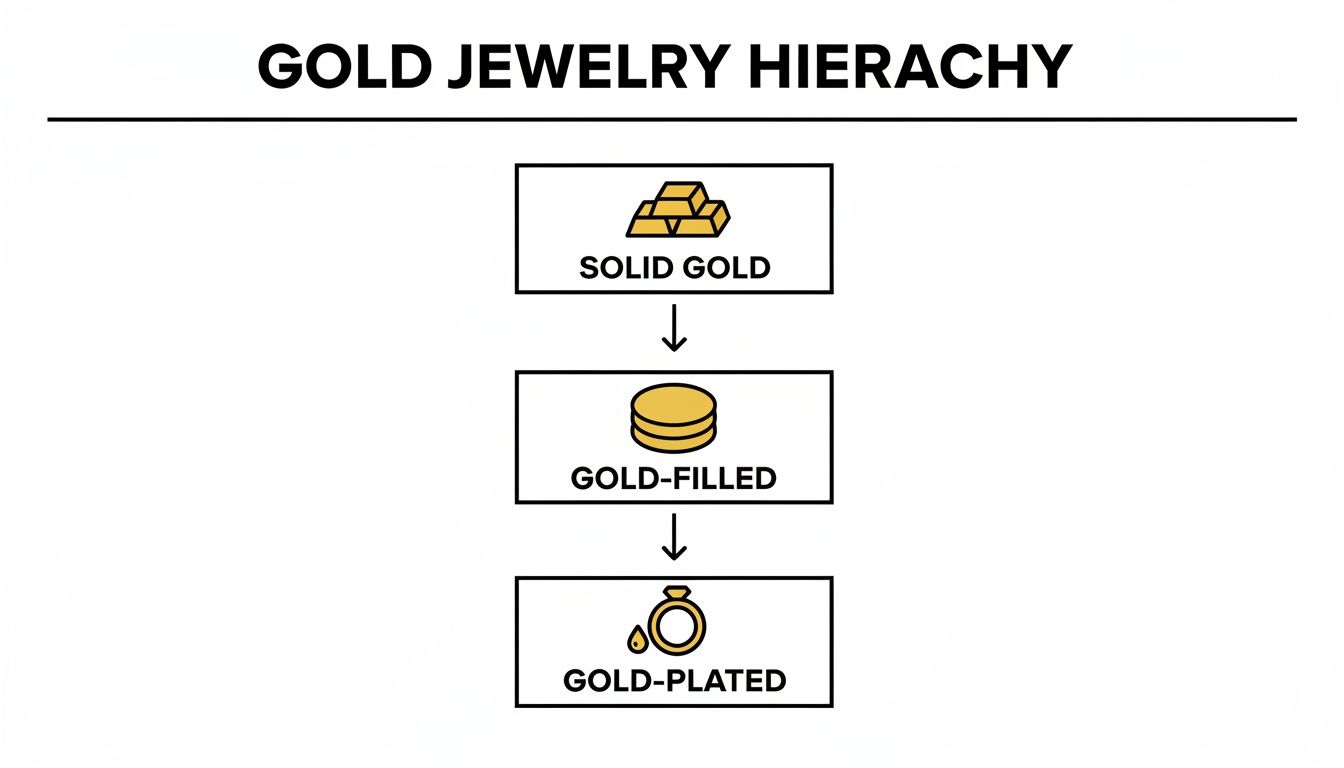
As you can see, solid gold is built to last, while gold-plated pieces are far more susceptible to both tarnishing and physical wear that exposes the base metal underneath.
Key Takeaway: The first step to proper care is a correct diagnosis. Dirt just needs a simple cleaning, tarnish needs a targeted treatment, and serious damage often needs a trip to the jeweler.
Knowing how to care for your specific piece is everything. For example, if you have a stunning moissanite ring, you want to protect both the brilliant stone and its metal setting. You can find everything you need to know in our complete guide on how to clean a moissanite ring to keep it looking brand new.
A Practical Guide to Keeping Your Gold Brilliant
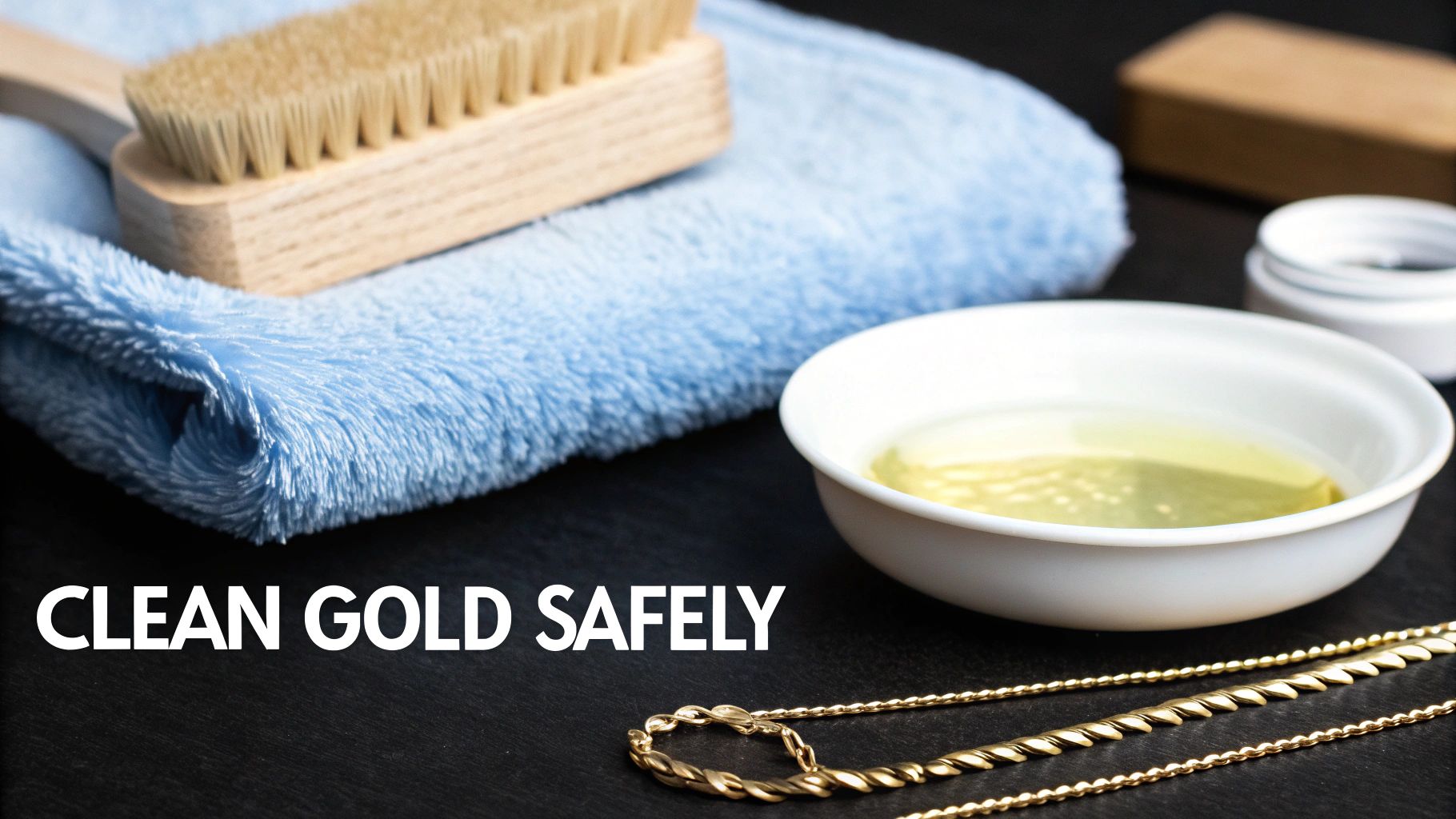
Knowing why your gold might look a little dull is one thing, but knowing how to fix it is where the magic happens. The best part? You don't need a professional jeweler or fancy equipment to bring that sparkle back. You can get fantastic results right in your own kitchen.
This simple method is perfect for most solid gold pieces. It's designed to gently lift away the daily buildup of oils, lotions, and general grime that can make your jewelry lose its luster, all without risking damage.
Your Simple At-Home Gold Cleaning Recipe
Ready to make your jewelry look brand new? Grab a few household items, and let's get started. This process is incredibly gentle but delivers a surprisingly professional shine.
Just follow these steps:
- Mix Your Solution: Find a small bowl and fill it with warm water. Avoid hot water, as sudden temperature changes can harm some gemstones. Add a few drops of a mild, ammonia-free dish soap (the classic blue Dawn is perfect) and give it a little swish to create some suds.
- Let It Soak: Place your gold jewelry into the solution and let it sit for about 20-30 minutes. This soaking time is key—it allows the soapy water to work its way into all the nooks and crannies, loosening up stubborn dirt.
- A Gentle Scrub: Use a brand new, ultra-soft toothbrush to give your jewelry a light scrub. A baby toothbrush is ideal for this. Pay special attention to the areas around stone settings and within detailed patterns where grime loves to hide.
- Rinse It Clean: Hold your jewelry under a gentle stream of lukewarm running water to wash away all the soap and loosened dirt. Pro tip: plug the sink drain first or place your pieces in a small strainer to avoid any heartbreaking accidents.
- Dry and Polish: Pat your pieces completely dry with a soft, lint-free cloth. A microfiber towel or a dedicated jewelry polishing cloth works best. Make sure every bit of moisture is gone before you wear or store it.
A Quick Word of Caution: This cleaning method is fantastic for solid gold and diamonds. However, if your jewelry features porous stones like pearls, opals, or emeralds, skip the long soak. Instead, just dip a soft cloth into the soapy water, gently wipe the metal, rinse with a clean damp cloth, and dry it right away.
Essential Prevention Tips
Honestly, the best way to keep your jewelry clean is to stop it from getting dirty in the first place. A few small changes to your daily routine can make a huge difference, keeping your pieces brilliant for much longer.
- Jewelry-Free Zones: Always take your gold jewelry off before showering, hopping in a swimming pool, or relaxing in a hot tub. Chlorine, in particular, is incredibly harsh on gold alloys and can cause serious damage over time.
- Last On, First Off: Make your jewelry the final touch. Put it on after you’ve applied all your lotions, perfumes, hairspray, and makeup. The chemicals in these products can speed up discoloration.
- Smart Storage: When you're not wearing your pieces, store them in a clean, dry, fabric-lined jewelry box or a soft pouch. Keeping items separate is the best way to prevent them from scratching one another.
- A Quick Wipe-Down: Get in the habit of giving your jewelry a quick wipe with a soft cloth after you take it off. This simple step removes the skin oils and residues that build up throughout the day.
For white gold pieces, which often have a rhodium plating, proper care is even more critical to maintaining that bright, silvery-white finish. You can dive deeper into how to care for this protective layer in our article about rhodium plating costs and care.
Your Gold Tarnish Questions, Answered
Let's dig into some of the most common questions people ask about gold jewelry. Think of this as the practical, real-world side of things, where we can tackle those specific situations and curiosities that pop up when you're wearing and caring for your favorite pieces.
Does White Gold Tarnish?
Yes, but probably not in the way you're thinking. White gold doesn't develop that classic dark tarnish. Instead, it can start to look a bit... warmer or more yellow over time. Here's why.
White gold is actually yellow gold mixed with white metals like palladium or nickel. To get that signature bright, silvery-white shine, jewelers plate it with a thin layer of rhodium. It’s this rhodium plating that gives it that stunning, mirror-like finish.
Over months or years of wear, that rhodium plating can slowly wear away, revealing the slightly yellowish gold alloy underneath. This isn't damage or corrosion; it's a completely normal cosmetic change.
Thankfully, it's an incredibly easy fix. Just take it to a jeweler. They can re-plate it with rhodium, and it will look brand new again. It's just a standard part of keeping your white gold looking its best.
Can My Skin Chemistry Make Gold Tarnish Faster?
It absolutely can. We all have unique body chemistry, and factors like your skin's pH level or how much you perspire can have a noticeable effect on your jewelry. If your sweat is on the more acidic side, it can speed up reactions with the alloy metals in your gold—especially copper.
This is what’s happening when you see a faint black or greenish mark on your skin under a ring. It’s not a sign that the gold is "fake." It's just a simple chemical reaction between the metal alloys and your skin.
If this is a recurring issue for you, the best fix is to move up in gold purity. An 18k gold piece, being 75% pure gold, has significantly fewer reactive alloys than 10k or 14k gold. Making that switch often solves the problem completely.
Your personal body chemistry is a unique factor in how your gold jewelry wears. If you notice skin discoloration, it's a sign that the alloys in your jewelry are reacting with your skin's natural acidity.
Is It Safe to Clean My Gold and Gemstone Jewelry at Home?
Not only is it safe, but it's one of the best things you can do for your jewelry, especially for durable pieces set with stones like moissanite or diamonds. Regular home cleaning is the secret to keeping that day-one sparkle and stopping grime from building up.
The best way to do it is simple. Fill a small bowl with warm water and add a few drops of a mild dish soap. Let your jewelry soak for about 20-30 minutes, which is usually enough time to loosen up any oils and dirt.
After the soak, grab a new, soft-bristled toothbrush and gently scrub around the stone, behind the setting, and in any nooks and crannies. Then, just rinse it well under clean, lukewarm water and pat it dry with a soft, lint-free cloth. And a word of caution: stay away from harsh chemicals like bleach or ammonia. They can cause permanent damage to the metals and some gemstones.
How Does Gold Compare to Silver and Platinum on Tarnish?
When you line them up, you can really see why gold hits the sweet spot for fine jewelry. Each of these popular metals has its own personality when it comes to tarnish.
- Silver: Sterling silver is gorgeous but famously high-maintenance. It reacts with sulfur in the air and quickly develops a dark, blackish film. You have to polish it regularly to keep it looking bright.
- Gold: Gold alloys offer a fantastic balance. Because they contain so much non-reactive pure gold, they are far more tarnish-resistant than silver. They keep their beautiful luster with very little effort.
- Platinum: Like pure gold, platinum is a noble metal and does not tarnish at all. It's incredibly tough and dense, but it's also much more expensive than gold, putting it in a luxury category all its own.
In the end, gold strikes that perfect balance between tarnish resistance, timeless beauty, and overall value. It’s no wonder it has remained the most practical and beloved choice for fine jewelry meant to be worn for a lifetime.
At Moissanite Diamond, we believe that brilliant, beautiful jewelry should be accessible to everyone. Our pieces are crafted with ethically sourced moissanite and set in high-quality metals designed to offer lasting sparkle and style. Explore our stunning collections and find your perfect piece today at https://www.moissanitediamondjewerly.com.